A demand letter asks someone to pay money, fulfill an obligation, or take another specified action. A cease-and-desist letter asks someone to stop conduct that may violate your rights, such as trademark infringement or a breach of an enforceable non-solicitation agreement.
The two can overlap. If a client owes your business money, a demand letter may help recover payment or negotiate a resolution. If a competitor is using a confusingly similar business name, a cease-and-desist letter may help stop the conduct before further harm occurs. When a dispute involves both issues, one letter can address them together.
Choosing the right approach matters. A well-drafted letter can help resolve a dispute without litigation, while unsupported allegations, improper threats, or overly aggressive demands can weaken your position or even provoke a lawsuit.
Neither letter is a lawsuit or court order, but both can play an important role in protecting your business and establishing a record of your position. Glide Legal's Phoenix business attorneys can help assess your situation and determine the most appropriate approach to resolving the dispute.
What is a demand letter?
A demand letter is a formal written request that another party pays money, performs an obligation, or takes another specified action by a stated deadline. It may explain the legal action the sender intends to consider if the dispute remains unresolved.
Businesses commonly use demand letters for:
- Unpaid invoices or past-due accounts.
- Breach of contract, such as a vendor accepting a deposit but failing to deliver.
- Return of a deposit, earnest money, or property.
- Compensation for damage to business property or equipment.
- Refunds or credits owed under an agreement.
- A buyer’s or seller’s failure to close or perform under a business purchase agreement.
A demand letter is often sent before litigation to give the other party an opportunity to resolve the dispute. It can document the sender’s position and efforts to resolve the matter, although whether it may be used in court depends on its contents and applicable evidence rules.
Sending a demand letter does not, by itself, entitle you to recover attorney’s fees. In Arizona contract disputes, fees may be available under the contract’s terms or under A.R.S. § 12-341.01, which gives courts discretion to award fees to the successful party once a dispute is litigated. Under A.R.S. § 12-341.01, a rejected written settlement offer can affect attorneys’ fee awards in a contested contract action. An ordinary pre-lawsuit demand letter does not automatically trigger that rule.
What is a cease-and-desist letter?
A cease-and-desist letter is a formal written demand that someone stop specified conduct the sender believes violates their rights and refrain from repeating it. Its primary purpose is to stop or prevent harm, although it may also demand compensation or reserve the sender’s right to seek damages.
Businesses commonly use cease-and-desist letters for:
- Alleged trademark infringement such as a confusingly similar business name, logo, or domain.
- Alleged copyright infringement, such as unauthorized copying of website text, photos, or marketing materials.
- Breach of an enforceable non-compete or non-solicitation agreement, or a confidentiality obligation.
- Alleged misuse of trade secrets or confidential customer information.
- Allegedly defamatory statements about the business.
- Harassment or unlawful interference with customer relationships.
A cease-and-desist letter is not a court order and generally does not create a legal obligation by itself. However, the recipient may already have obligations under a contract or applicable law.
The letter documents the sender’s allegations and demands. Depending on the claim and the letter’s contents, proof of notice may matter in later litigation, but the letter does not establish liability or guarantee damages or an injunction.
Can one letter be both?
The simplest way to tell them apart is to ask what you want the other party to do. A demand letter usually addresses something the other party owes you, such as a payment or an unfulfilled obligation. A cease-and-desist letter addresses something the other party is doing that you want stopped.
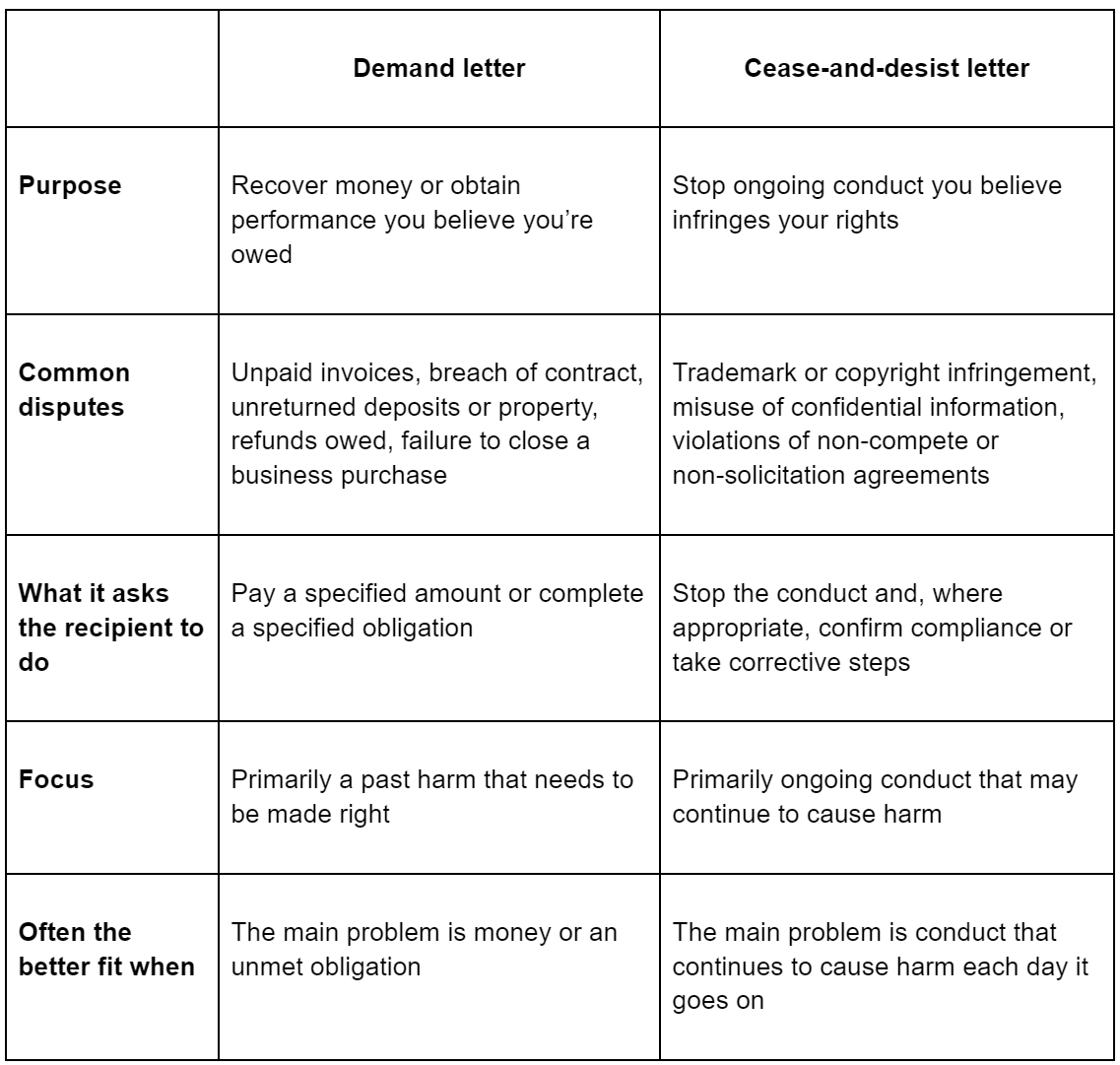
If you’re collecting an overdue invoice, a demand letter is usually the right starting point. If a competitor is using a confusingly similar name, a cease-and-desist letter is usually more appropriate because the priority is stopping the use. Many disputes involve both, though. A single letter can demand payment or performance and also require that specified conduct stop.
For example, a former employee who allegedly took confidential customer information may be asked to stop using or disclosing it, preserve relevant evidence, and arrange for the return or deletion of copies through an appropriate process. The same letter may also demand compensation for supported losses.
Each demand should be separate and specific, with an appropriate deadline. Requests to return or delete information should be coordinated with evidence-preservation requirements.
What should you do if you receive a demand or cease-and-desist letter?
Receiving one of these letters can be unsettling, especially if it arrives from an attorney or sets a short deadline. Don’t ignore it or fire off an angry reply. Ignoring it can mean missing a deadline or losing a chance to resolve the dispute early, and a hasty response may include admissions that are later used against you. A careful, informed response usually puts you in a better position whether the claim turns out to be strong or weak.
Review the letter and your own records first
Start by identifying exactly what the letter asks you to do and by when. Then gather the documents that bear on the dispute, such as the contract, invoices, payment records, correspondence, and any agreements the sender relies on. Check whether your contract includes provisions that affect the dispute, including notice requirements, dispute-resolution or arbitration clauses, or an attorney’s fee clause. It’s also worth checking whether your business insurance might cover the claim since some policies require prompt notice.
Preserve documents and communications
Once a dispute is likely to end up in litigation, businesses may have a legal obligation to preserve relevant evidence. That includes emails, text messages, files, and electronic records, not just paper documents. If your systems routinely delete messages or files, you may need to suspend that deletion for anything relevant to the dispute. Losing or destroying evidence, even unintentionally, can lead to court sanctions and undermine an otherwise strong defense. Preserved records can also help you since they may show that you paid, performed, or acted within your rights.
Evaluate the allegations on their merits
A demand or cease-and-desist letter is written to persuade, and it presents only the sender’s side. Don’t assume the demands are legally justified simply because the letter is formal, cites statutes or comes from a law firm. Consider whether the facts are accurate, whether the amount claimed is documented, whether the sender fulfilled its own obligations and whether you have defenses or claims of your own. In a trademark dispute, for example, the sender may overstate the scope of its rights, and you may have your own rights based on prior use or registration. At the same time, don’t dismiss a letter just because it overstates some points. A claim can be exaggerated and still have merit.
When involving an attorney is especially important
Legal advice can be valuable for any letter, but it’s especially important when:
- The letter threatens litigation or you’ve already been served with a lawsuit, since court deadlines are strict and missing them can result in a default judgment.
- The sender demands a substantial amount of money or performance that would significantly affect your business.
- The letter alleges trademark, copyright, or other intellectual property infringement where the response can affect your branding, your products, and whether either party files suit first.
- The dispute involves confidential information, trade secrets, or non-compete or non-solicitation obligations.
- The letter asks you to sign an agreement, admission, or written assurance.
An attorney can assess the strength of the claims, identify defenses and deadlines, and help you choose the right response. That might mean a written reply, negotiation, a request for more information or, in some cases, no response at all.
Drafting and responding effectively
An effective letter should be factual, specific, and measured. Consider including:
- The parties’ names, the date and the delivery method.
- A concise summary of what happened, including relevant dates.
- The legal basis for the demand, such as a contract provision, trademark rights or a law you believe was violated.
- Exactly what you want: a stated payment amount, performance of an obligation or an end to specified conduct.
- A reasonable deadline suited to the dispute and any applicable notice or cure requirements.
- The next steps you intend to consider if the dispute remains unresolved without exaggeration or improper threats.
- Relevant supporting documents, such as invoices, agreements or screenshots.
- A request to preserve relevant documents and evidence.
Document delivery and, where possible, receipt. Follow any applicable contractual or statutory notice requirements rather than assuming email or certified mail will always be sufficient.
How long should you give the other party to respond?
Arizona law doesn't establish a single response deadline for demand or cease-and-desist letters. While many letters allow 10 to 30 days, the appropriate timeframe depends on several factors:
- Contract requirements: Review any notice provisions or cure periods that must be followed before pursuing additional remedies.
- Urgency of the situation: Ongoing harm, such as trademark infringement or misuse of confidential information, may justify a shorter deadline or immediate legal action.
- What you're requesting: Give the recipient a reasonable opportunity to comply. Paying an invoice may require less time than rebranding a business or completing an unfinished project.
An attorney can help determine an appropriate deadline based on the agreement, applicable laws, and circumstances of the dispute.
Common mistakes that can weaken your position:
- Threatening criminal charges to get paid. Using threats of criminal prosecution to pressure someone into paying a debt can create serious legal and ethical risks, including potential extortion allegations. If you believe criminal conduct occurred, consult an attorney before referencing it in a payment demand.
- Overstating facts, damages, or legal rights. Your letter may later be used in litigation, subject to applicable evidence rules.
- Making unnecessary admissions about your own conduct, performance, or delays.
- Threatening action you are not prepared to consider. Empty threats can undermine your credibility.
- Overreaching on intellectual property claims. An aggressive IP letter can prompt the recipient to seek a declaratory judgment first, potentially affecting the forum and litigation strategy.
- Assuming every restrictive covenant is enforceable. Non-compete and non-solicitation restrictions require a case-specific assessment.
- Demanding deletion of information without addressing evidence preservation.
- Missing the deadline to file suit while waiting for a response.
What happens after you send it?
Common responses include payment or compliance, negotiation, disagreement, or no response.
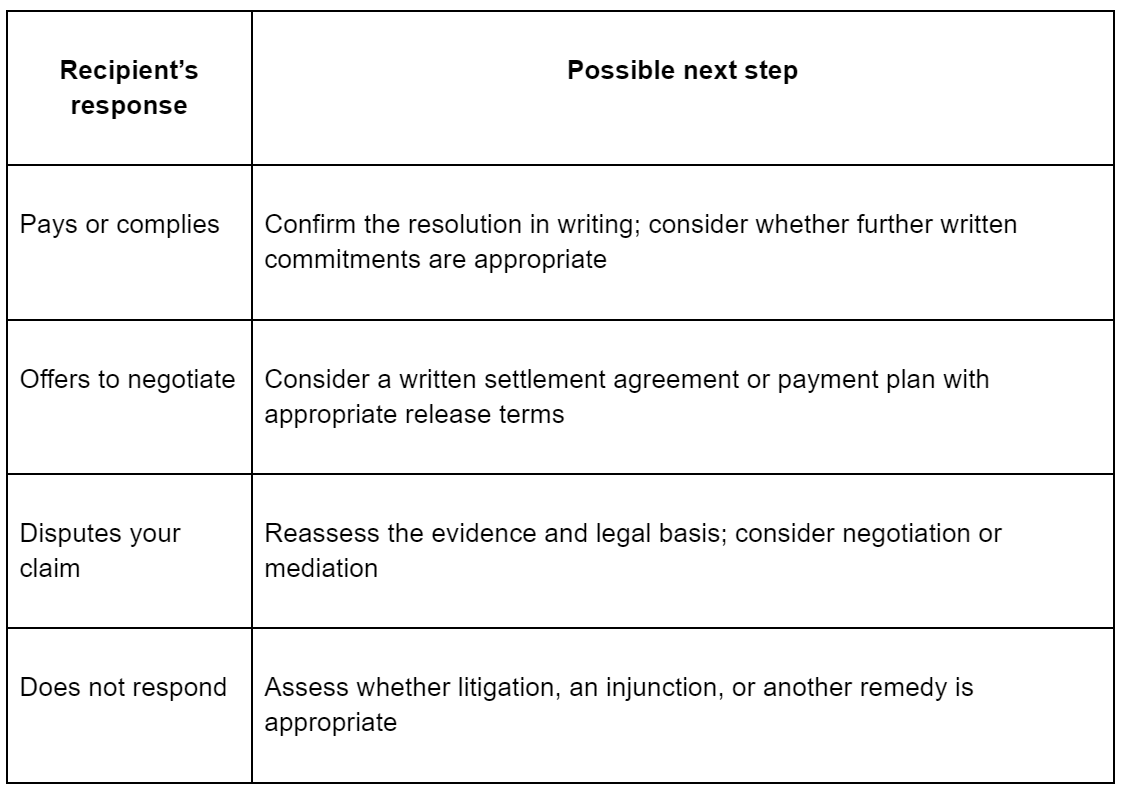
An attorney can assess the claim, identify notice requirements, draft appropriate demands and advise on next steps. Attorney involvement does not guarantee a response or a particular outcome.
Frequently Asked Questions
What is the difference between a demand letter and a cease-and-desist letter?
A demand letter asks the recipient to take specified action such as paying money or performing an obligation. A cease-and-desist letter demands that specified conduct stop. The categories overlap: a cease-and-desist letter is a type of demand letter and one letter can seek both payment and an end to conduct.
Is a cease-and-desist letter legally binding?
Generally, not by itself. It is not a court order, but the recipient may already have obligations under a contract or applicable law. The letter documents the sender’s allegations and demands; it does not establish liability.
Is a demand letter required before suing in Arizona?
Not in every case. Some contracts and certain claims require notice or other steps before litigation. Review the applicable agreement and legal requirements before filing suit.
Can I write a demand letter or cease-and-desist letter myself?
Yes. A business owner can send either letter. An attorney can help assess the claim, comply with applicable notice requirements, and avoid unsupported allegations, improper threats, or unnecessary admissions.
How long should I give the recipient to respond?
Use a reasonable deadline suited to the dispute and any applicable notice or cure requirements. A letter might allow 10 to 30 days for a response while urgent ongoing harm may justify a shorter deadline. There is no single deadline appropriate for every letter.
What should I do if my business receives a cease-and-desist letter?
Preserve relevant records, review the stated deadline, and avoid an impulsive response. Have a business attorney assess the allegations and demands. The sender’s claims may be disputed, and the requested action may exceed the sender’s enforceable rights.
How Glide Legal Can Help
Whether you’re trying to collect what you’re owed, stop someone from using your brand or decide how to respond to a letter you’ve received, the right first step depends on the facts, the agreements involved and what you want to achieve. Glide Legal is a Phoenix business law firm, and attorneys Masar Mandwee and Alex Karam help Arizona businesses handle these situations with a practical strategy aimed at resolving disputes without unnecessary escalation.
Depending on your situation, we can help with:
- Evaluating your claim. We review your contracts, invoices, emails, payment records, and other documents to assess the strengths and weaknesses of your position before anything is sent.
- Choosing the right approach. We help you decide whether a demand letter, a cease-and-desist letter, a combined letter or a different step such as a contract notice or direct negotiation is the best fit.
- Preparing the letter. We draft letters that state your position clearly, set appropriate deadlines and avoid unsupported allegations, improper threats, and unnecessary admissions that can weaken your position if the dispute goes further.
- Responding to a letter you’ve received. If your business receives a demand or cease-and-desist letter, we can review the allegations, identify your options and defenses and help you respond without escalating the dispute.
- Negotiating a resolution. Many disputes can be resolved through negotiation. If the other party doesn’t comply or responds with its own claims, we can handle the next round of communications and advise on options such as further negotiation, mediation, or litigation.
- Reducing the risk of future disputes. Once the immediate issue is resolved, we can help you strengthen your contracts and processes so similar problems are less likely to arise.
For disputes that go beyond a single letter, such as partnership conflicts, vendor or client disagreements, or misuse of confidential information, our business disputes practice can help you develop a broader strategy.
We offer flat-fee pricing whenever possible, and when a matter requires a different arrangement, we provide a clear estimate before work begins.
Need help with a demand letter or cease-and-desist letter in Arizona?
The first letter in a dispute often shapes everything that follows. An unsupported demand can weaken your position, a missed contract notice requirement can complicate your claim, and a response sent before you fully understand the allegations can create problems that are hard to undo. A short conversation with an attorney can help you understand where you stand and choose a sensible next step, whether you’re sending a letter or responding to one.
Request a free consultation or call (602) 902-1395 to discuss your situation with Glide Legal.